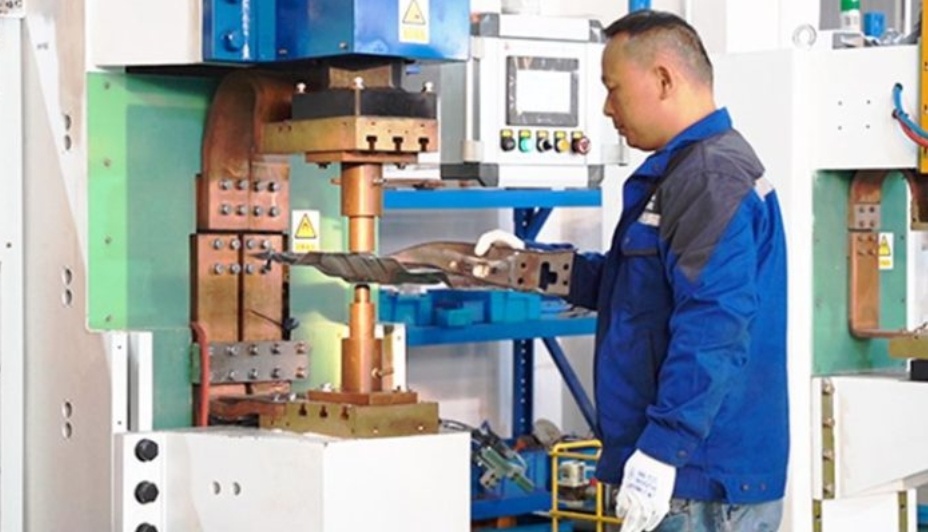
Aluminum Spot Welder uses controlled electrical current and pressure to fuse metal parts quickly and accurately. These machines deliver strong, precise joints without extra materials, making them vital for efficient and reliable metal fabrication.
Looking for a fast, reliable way to join metals with pinpoint accuracy? Resistance welding machines are revolutionizing fabrication by delivering strong, flawless joints that boost efficiency and quality in every project.
Resistance welding machines combine heat and pressure to create seamless metal joints without extra fillers. Widely used in industries from automotive to electronics, they ensure durable connections with unmatched speed and precision.
What Are Resistance Welding Machines?
Resistance welding machines join metals by passing a high electric current through the contact points between metal pieces while applying pressure. The resistance at the interface generates localized heat, melting the metal surfaces together. Once cooled under pressure, the metals form a solid, permanent joint. This technique eliminates the need for filler materials or gases, offering clean and efficient welds ideal for various applications.
How Resistance Welding Machines Operate
Break down the step-by-step process of creating durable metal joints.
- Clamping the Metal Pieces
Electrodes hold the metal parts firmly to ensure proper contact.
- Applying Electric Current
A controlled electric current flows through the electrodes and metal, generating heat at the joint.
- Heat Generation by Resistance
The resistance at the contact point creates intense heat, melting the metals locally.
- Fusion Under Pressure
The melted metals fuse together while pressure is maintained.
- Cooling and Solidification
The weld cools and solidifies, forming a strong, permanent bond.
This process is fast, efficient, and precise, producing consistent welds ideal for mass production.
Types of Resistance Welding Machines
Explore the common varieties tailored for specific industrial needs.
- Spot Welding Machines
Ideal for joining sheet metals by welding at discrete spots, widely used in automotive assembly.
- Seam Welding Machines
Create continuous welds along metal seams, perfect for manufacturing tanks and pipes.
- Projection Welding Machines
Focus currently on small raised projections on metal surfaces, useful for joining irregular shapes.
- Flash Welding Machines
Use an arc and pressure to join large sections, common in rail and heavy machinery production.
Each type serves unique purposes depending on metal thickness, shape, and production requirements.
Advantages of Resistance Welding Machines
Understand why industries rely on resistance welding for metal joining.
- High Efficiency and Speed
Resistance welding can complete welds in seconds, ideal for high-volume manufacturing.
- Strong and Durable Joints
Produces bonds that withstand stress, vibrations, and environmental exposure.
- Minimal Heat-Affected Zone
Localized heating prevents warping or weakening of surrounding metal areas.
- Environmentally Friendly
No filler metals or shielding gases reduce waste and environmental impact.
- Automation-Friendly
Easily integrated into automated production lines for consistent quality and output.
Key Features to Look for in Modern Resistance Welding Machines
Modern resistance welding machines stand out with features like precise current and pressure controls, user-friendly digital interfaces, and durable electrode tips. These innovations ensure consistent weld quality, ease of operation, and longer machine lifespan, making metal joining faster and more reliable than ever.
Identify essential attributes for optimal performance and ease of use.
- Adjustable current and pressure controls for versatile welding.
- Real-time monitoring systems to ensure weld quality.
- Ergonomic design for user comfort during extended use.
Industries Benefiting from Resistance Welding Technology
Resistance welding technology powers a wide range of industries, from automotive and aerospace to electronics and heavy machinery. Its ability to deliver fast, strong, and precise metal joints makes it essential for producing durable products across diverse manufacturing sectors worldwide.
See where resistance welding machines make the biggest impact.
- Automotive Manufacturing
For assembling car bodies, frames, and components with speed and precision. - Electronics Industry
Connecting delicate components without damage is crucial for circuit boards and devices. - Aerospace Sector
Joining lightweight metals while maintaining structural integrity.
- Heavy Machinery and Construction
Producing robust joints in steel parts and large equipment.
- Household Appliances
Manufacturing durable, attractive metal casings and frames.
Resistance welding’s versatility makes it indispensable across many fields.
Maintenance Tips for Your Resistance Welding Machine
Keep your Resistance Welding Machine performing at its best with these simple tips.
- Regularly inspect and clean electrode tips to maintain conductivity.
- Check cables and connectors for wear or damage.
- Keep cooling systems free from dust and debris.
- Lubricate moving parts as recommended by the manufacturer.
- Follow a routine service schedule to detect issues early.
Proper maintenance extends machine life and ensures consistent weld quality.
Safety Practices When Using Resistance Welding Machines
Always wear protective gear such as gloves, safety glasses, and flame-resistant clothing. Maintain proper ventilation to avoid inhaling fumes. Ensure the machine is correctly grounded to prevent electric shocks. Keep the workspace clear of flammable materials and follow all manufacturer safety protocols.
Conclusion:
Resistance welding machines continue to power precision metal joining across global industries. Their ability to create strong, clean welds quickly and efficiently makes them invaluable in manufacturing and repair settings. By understanding the technology and choosing the right equipment, businesses can enhance quality, reduce waste, and boost productivity in every metal fabrication project.
FAQs:
- What is the main function of a resistance welding machine?
It joins metal parts quickly by using electric current and pressure to create strong, precise welds.
- Which metals can resistance welding machines handle?
They work well with steel, aluminum, and various alloys commonly used in manufacturing.
- How does resistance welding differ from traditional welding?
Resistance welding uses heat generated by electrical resistance instead of external flames or fillers.
- Are resistance welding machines suitable for automated production?
Yes, they are ideal for automation due to their speed and consistent weld quality.
- What safety measures should be followed when using resistance welders?
Always wear protective gear, ensure proper ventilation, and follow manufacturer guidelines for safe operation.