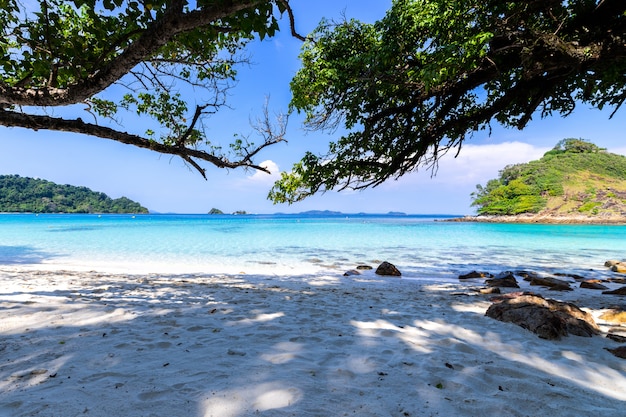
If you’ve ever scrolled through photos of Havelock Island and stopped at one showing jet-black boulders sitting against powder-white sand and three distinct shades of blue water, chances are you were looking at Kalapathar Beach. It’s the quieter, more contemplative cousin of the famous Radhanagar Beach — and for a lot of travellers, it ends up being the more memorable stop of the trip.
This guide covers everything you actually need before you go: how to get there, when to visit, what it costs, what to pack, and the small details that make the difference between an okay visit and a great one.
Where Is Kalapathar Beach Located?
Kalapathar Beach sits on the eastern coast of Havelock Island (officially renamed Swaraj Dweep), part of the Andaman and Nicobar Islands. The name literally translates to “black rock” in Hindi — a nod to the volcanic black boulders scattered along the shoreline, which locals say give the nearby village its name too.
It’s roughly 61–64 km from Port Blair, the Andaman capital, and sits at the far end of Havelock, well past the main market area.
How to Reach Kalapathar Beach
Step 1: Get to Havelock Island.
There’s no airport on Havelock, so you’ll first fly into Port Blair and then take a ferry. Government and private ferries run regularly and take about 1.5–2 hours to cross from Port Blair to Havelock Jetty. Booking your ferry a few days in advance during peak season (December–January) is a smart move, since seats sell out fast.
Step 2: Get from the jetty to the beach.
This is where most travellers get confused, because different sources quote different distances — anywhere from 6.5 km to 12 km depending on which route and starting point they mean. A realistic expectation is a 20–40 minute ride covering roughly 7–8 km from the main jetty area.
- Auto-rickshaw or taxi: Easiest for most travellers. Agree on the fare before you get in, or ask for a return trip rate — return autos can be harder to find once you’re at the beach, especially outside sunrise hours.
- Rented scooter or bike: The most flexible option, costing roughly ₹400–500 a day. The ride itself is a highlight — the road winds past resorts, cafés, and patches of dense forest.
- Local bus: The cheapest way in, at around ₹28–50 depending on where you board. Bus timings are less frequent, so this suits travellers who aren’t in a rush.
Best Time to Visit
Season: October to May is ideal, when the sea is calmer and skies are clearer. June to September brings the monsoon, with rough seas and frequent rain — not the best window for a beach visit.
Time of day: Kalapathar is one of the best sunrise spots on the whole island, so most seasoned visitors recommend arriving by 5:00–5:30 AM. The early light on the water and rocks is genuinely different from what you’ll see later in the day, and you’ll have the beach almost to yourself. Late afternoon is the second-best window — still relatively quiet, with soft light for photos. Midday is worth skipping if you can; there’s very little natural shade, and the sun gets harsh fast.
Weather at Kalapathar Beach Through the Year
| Months | Weather | Should You Visit? |
| October – February | Pleasant, dry, cool breeze | Best time — peak season |
| March – May | Warm, sunny, sea still calm | Good, but carry sun protection |
| June – September | Monsoon, heavy rain, rough sea | Avoid — many water activities shut down |
Even in the best months, mornings are noticeably cooler and calmer than afternoons, which is another reason the sunrise slot works so well here.
Entry Fee and Timings
There’s no formal entry fee to visit Kalapathar Beach — it’s open and freely accessible during daylight hours. Basic facilities like toilets and changing rooms are available near the beach for a small charge (typically ₹10–30 per use), though don’t expect resort-level upkeep — these are simple, functional setups.
What Makes Kalapathar Beach Worth Visiting
- The three-toned water: Close to shore, the water is pale over white sand, deepens to turquoise a little further out, and turns almost black-blue near the horizon — an effect that shows up beautifully in photos and is one of the beach’s signature features.
- The black rock formations: Large volcanic boulders are scattered across parts of the shoreline, creating natural frames for photography and a striking contrast against the white sand.
- Fewer crowds: Compared to Radhanagar Beach (about 13 km away) and Elephant Beach, Kalapathar sees noticeably fewer visitors, which makes it a better pick if you want a calmer, more personal experience.
- Marine life on the shore: Keep an eye out for hermit crabs and small coral fragments scattered along the sand — interesting to spot, but best left undisturbed.
Things to Keep in Mind
- Swimming isn’t really recommended: The seabed near the rocks is uneven, and currents can be unpredictable. Wading in the shallows is generally fine, but this isn’t a beach built for a proper swim — Elephant Beach or Radhanagar are better suited for that.
- Shade is minimal: Carry a hat, sunglasses, and sunscreen; there are very few natural shaded spots.
- Watch your footing near the water: Some visitors have noted tiny broken shells and coral fragments along parts of the sand, so footwear helps if you’re sensitive to that.
- Food and drink: A handful of small stalls near the beach sell tea, coffee, coconut water, Maggi noodles, and snacks, so you don’t need to carry a full meal — just water and any specific snacks you prefer.
- Photography services: Local photographers sometimes offer sunrise photo shoots on the spot. Worth considering if you want professional shots without carrying your own gear.
What to Pack
- Hat, sunglasses, and reef-safe sunscreen
- A light beach mat or towel
- Water bottle and some snacks
- Footwear you don’t mind getting sandy or slightly wet
- A change of clothes if you plan to wade in
- Cash in small denominations (for autos, buses, and stall purchases)
Budget Breakdown (Approximate, Per Person)
| Expense | Cost (INR) |
| Ferry (Port Blair – Havelock, one-way) | ₹700 – 1,500 |
| Auto/taxi (jetty to beach, one-way) | ₹300 – 700 |
| Scooter rental (per day) | ₹400 – 500 |
| Local bus (one-way) | ₹28 – 50 |
| Changing room / shower / toilet use | ₹10 – 30 each |
| Tea, snacks, coconut water at beach stalls | ₹50 – 150 |
A budget traveller using buses and skipping extras can cover the beach visit in well under ₹500. Someone renting a scooter or taking taxis both ways will spend closer to ₹800–1,200 for the day.
A Sample Half-Day Itinerary
- 5:00 AM – Leave your stay in Havelock, head straight to Kalapathar Beach
- 5:30 – 6:30 AM – Watch the sunrise, walk along the black rocks, take photos
- 6:30 – 7:00 AM – Chai and snacks at a beach-side stall
- 7:00 – 7:30 AM – Head back towards the main market or your resort for breakfast
- Rest of the day – Combine with Radhanagar Beach (sunset) or Elephant Beach (snorkelling) to make a full day of it
Where to Stay Near Kalapathar Beach
Most travellers base themselves in Havelock’s main areas — Govind Nagar, Beach No. 3, or Vijay Nagar — rather than right next to Kalapathar itself, since these areas have a wider range of guesthouses, resorts, and restaurants, plus easier access to the jetty. From any of these, Kalapathar is a short auto or scooter ride away.
Frequently Asked Questions
How far is Kalapathar Beach from Havelock Jetty?
Roughly 7–8 km, taking about 20–40 minutes by road depending on your mode of transport and traffic.
Is there an entry fee for Kalapathar Beach?
No. The beach is free to enter and open during daylight hours. Only facilities like toilets and changing rooms carry a small usage charge.
Can you swim at Kalapathar Beach?
Wading in the shallows is fine, but the seabed is uneven and rocky in places, so it isn’t considered a proper swimming beach. Elephant Beach and Radhanagar Beach are better options if swimming is your priority.
What is the best time of day to visit?
Early morning, around 5:00–5:30 AM, for sunrise. This is when the beach is calmest, coolest, and least crowded.
Is Kalapathar Beach good for families?
Yes — it’s quieter than Radhanagar and Elephant Beach, with basic facilities available. Just supervise children near the rocky patches and shallow water.
How is Kalapathar Beach different from Radhanagar Beach?
Radhanagar is larger, more popular, and known for sunsets and long sandy stretches. Kalapathar is smaller, quieter, known for sunrise views, and famous for its black volcanic rocks and three-toned water.
Do I need to book anything in advance?
No advance booking is needed for the beach itself. The only things worth booking ahead are your Port Blair–Havelock ferry tickets, especially in peak season (December–January).
Nearby Attractions
If you’re making a day of it, a few spots near Kalapathar are easy to combine:
- Radhanagar Beach – around 13 km away, Havelock’s most famous beach, known for its long sandy stretch and sunset views.
- Elephant Beach – reachable by boat or a scenic trek, popular for snorkelling and water sports.
- Kalapathar Lighthouse – close to the beach itself, offering panoramic views if you climb up.
- Havelock’s main market (Vijay Nagar area) – good for a meal and last-minute shopping before heading back to the jetty.
How Much Time to Spend Here
Most travellers spend 1–2 hours at Kalapathar — enough time to catch the sunrise, walk along the rocks, take photos, and grab a chai before heading to your next stop. It pairs well with an early-morning-to-afternoon itinerary that also covers Radhanagar or Elephant Beach later in the day.
Final Word
Kalapathar Beach isn’t the loudest or most photographed spot on Havelock, and that’s exactly its appeal. If you’re chasing a quiet sunrise, a beach that doesn’t feel overrun, and a landscape that looks different from anywhere else on the island, this is one stop worth building your morning around.