Do you know the right time to spray your crops with a drone? Drones are rapidly becoming the most preferred method for spraying fertilisers or pesticides due to their accuracy as well as efficiency. But timing is everything during the Rabi & Kharif harvest seasons in India.
Each season has its climate patterns as well as spraying windows, which means your drone schedule should be flexible enough to adapt to the changing seasons. Better crop health as well as lower input costs are all possible outcomes of strategically timed drone operations.
We will help you maximise the use of your drone by detailing the best spraying times for Rabi & Kharif crops, ensuring that your fields stay healthy. Read on to explore more with us!
What is Drone Spraying in Agriculture?
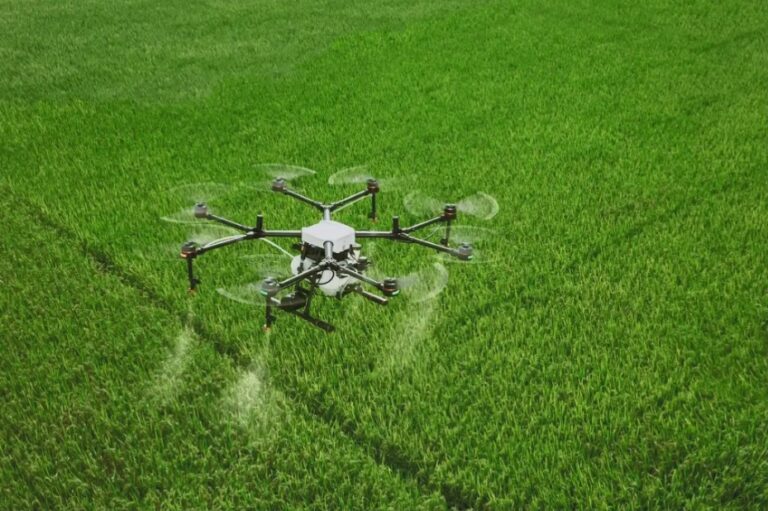
In simple words, using unmanned aerial vehicles to spray fertilisers or pesticides over crop fields is called agriculture drone spraying. However, it is an incredible tool for farmers as it has nothing to do with flying devices.
Drones have many advantages over manual spraying, from covering more area in less time to giving exact application with less chemical waste. They are helpful in inaccessible or uneven terrains where traditional spraying methods fail.
Drone spraying provides uniform coverage across the field by adapting to changing weather or crop conditions. This makes it a good choice for the Rabi & Kharif seasons.
It’s great for early morning misty sprays in Rabi, while drones work well in pest-heavy conditions in Kharif. Not only is farming made simpler using drones, but it’s also more efficient & more innovative.
Best Time to Use Drones for Spraying in Rabi Crops
Best Spraying Months
Rabi crops, which include wheat, mustard & barley, grow best in colder, drier climates, so their most important month is November to March.
Best Time of Day
Early mornings (7-9 AM) or late afternoons (4-6 PM) are perfect to minimise drift.
Common Timeline for Spraying
- Pre-flowering stage for preventive sprays
- Controlling pests or fungi after blooming
- Applications of nutrients during grain development
The Importance of Weather
Extremely low humidity & strong wind speeds can reduce the effectiveness as well as the reach of spraying.
Why Drones Work Best?
- Less evaporation
- Better coverage
- Agricultural drones are perfect for increasing yields while decreasing resource use during the Rabi season with pinpoint targeting.
Best Time to Use Drones for Spraying in Kharif Crops
Best Spraying Months
Farmers plant rice, corn & cotton during the Kharif season from June to October.
Timing Around Rainfall
The best time to spray is either before or after a light rain. To avoid chemical wash-off, do not spray during heavy rain or stormy conditions to avoid chemical wash-off.
Best Time of Day
Due to the lack of dew as well as more stable wind patterns between 9-11 in the morning, these times are ideal for places with high humidity. You can minimise evaporation by avoiding the heat of noon.
Pro Tips for Different Crops
- Spraying at the early or booting stages for rice
- Leaf development & tasseling for Maize
- The stages of blooming, as well as ball development for Cotton
The Effects of the Monsoon Weather
Keep updated on predictions for sudden rains as well as high humidity to ensure effective spraying, since these factors might impact the stability of drone flying as well as chemical absorption.
What are the Key Differences in Spraying Rabi vs Kharif Crops?
|
Aspect |
Rabi Crops (Nov-March) |
Kharif Crops (June-October) |
|
Weather Conditions |
Cool, dry climate with low humidity |
Warm, humid climate with frequent rainfall |
|
Best Spraying Time |
Early morning or late afternoon due to calm winds & low temperature |
Mid-morning, there will be less dew, before/after rainfall |
|
Drone Efficiency |
Stable weather allows precise spraying |
Monsoon winds & rain can disrupt drone operations |
|
Evaporation Rate |
Better chemical absorption |
It requires careful timing to reduce spray loss |
|
Common Crops |
Wheat, mustard & barley |
Rice, maise & cotton |
|
Spray Timing Focus |
It focuses on pest control as well as nutrient boost during the flowering stage |
Emphasis on fungal/pest control during vegetative & flowering stages |
Top Tips to Maximise Drone Spraying Efficiency
Follow these steps for the best results from your drone spraying sessions. Smart flying is more important than simply flying. Consider the following to ensure that you consistently achieve maximum efficiency.
Maintenance is key for your drone. Preventing problems in the middle of a flight requires regular maintenance as well as frequent checking of the batteries.
Make use of the right agrochemicals. Verify their suitability for use in aerial applications & compatibility with drone nozzles.
Reach the target precisely. Ensure the spray is evenly distributed without wasting chemicals by maintaining the correct speed & height.
Do not spray while the weather is poor. Rain or strong winds can wash away or spread droplets, limiting their effectiveness as well as wasting resources.
Drone spraying, with little preparation, can save money & time. It provides your crops with the boost they need season after season.
The Final Thoughts
Drone spraying at the ideal times, whether in the Rabi or Kharif seasons, can significantly improve crop health & yields.
Rabi crops do better in colder, more stable weather as well as when sprayed early in the morning, but Kharif crops need precise scheduling in terms of rain or humidity.
Drones provide accuracy & efficiency when used rightly. More productive farming is possible with the help of drone spraying if you know your crop’s lifecycle as well as the weather patterns that change over the seasons.