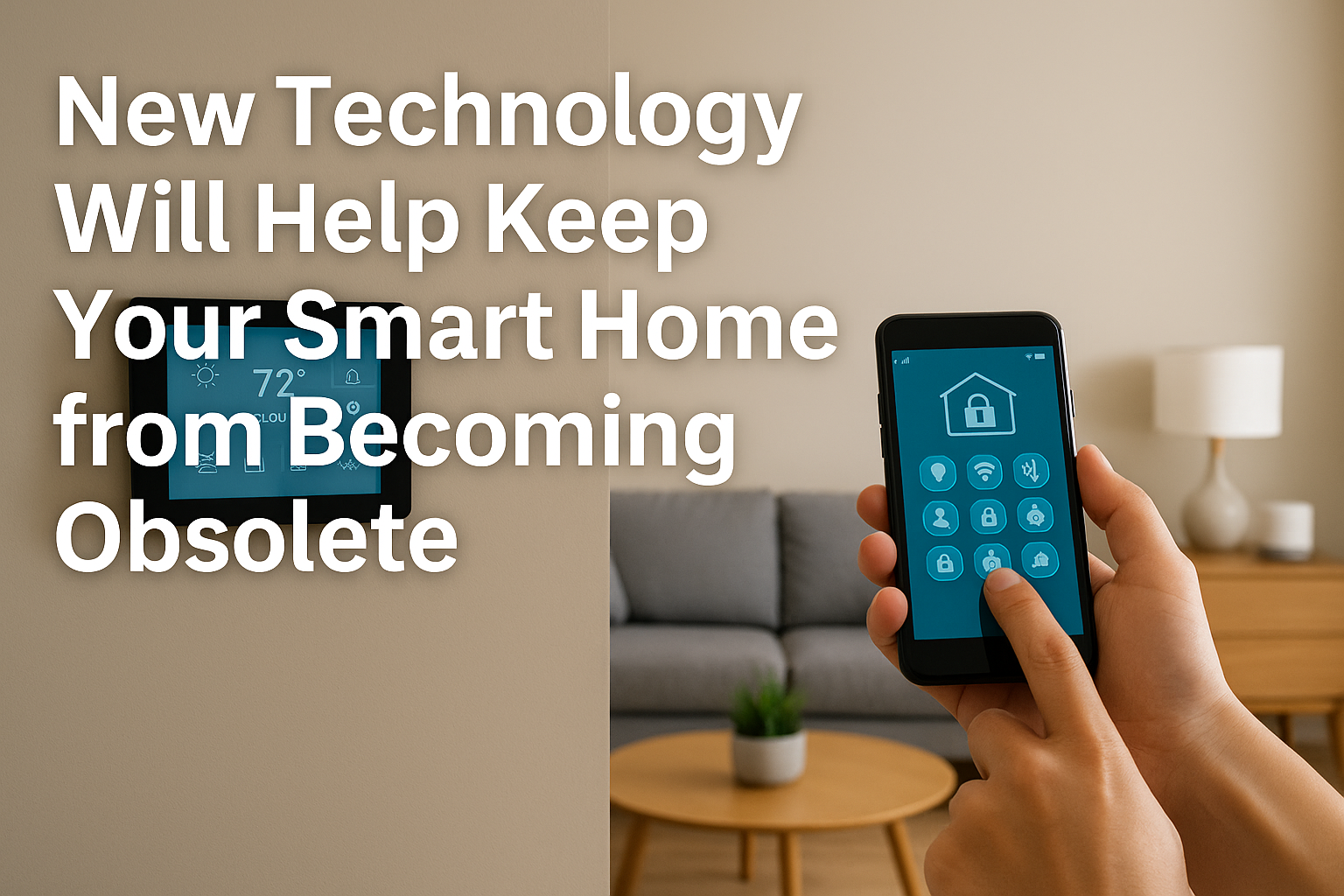
If there’s one thing faster than Wi-Fi these days, it’s how quickly technology changes. One minute, your smart home is state-of-the-art. The next? It feels like a museum of outdated gadgets and unsupported apps.
But here’s the good news: new technologies are being designed to future-proof your smart home — saving you from constant upgrades and tech anxiety.
Let’s explore how the latest innovations are making smart homes smarter, more adaptable, and built to last.
1. Matter Protocol: One Language for All Devices
Example: Imagine your Apple HomeKit, Amazon Alexa, and Google Nest products finally talking to each other — smoothly.
Technology: Matter is a new industry-standard smart home protocol developed by Apple, Google, Amazon, and others. It allows all your devices to work together, no matter the brand.
Why it’s a game-changer:
You won’t have to ditch your old system when switching platforms. Your devices become more flexible, not obsolete.
Matter is the universal translator your smart home desperately needed.
2. Over-the-Air (OTA) Firmware Updates
Example: Your security camera gets smarter while you sleep — without replacing any hardware.
Technology: Many smart home brands now provide regular firmware updates, delivered wirelessly. These updates enhance features, improve AI, and fix bugs — all without needing new equipment.
Why it’s a game-changer:
You don’t need to buy a new device every time there’s an upgrade. Your gadgets evolve with you.
3. Modular Smart Devices
Example: A smart thermostat where you only upgrade the screen, not the whole unit.
Technology: Some companies are now designing modular devices, where parts can be upgraded or replaced individually.
Why it’s a game-changer:
You save money, reduce e-waste, and keep your setup current without full replacements.
4. AI-Powered Predictive Tech
Example: Lights, locks, and temperature adjust before you even touch a button.
Technology: With machine learning, smart homes are starting to predict your habits based on time, movement, and voice patterns.
Why it’s a game-changer:
It moves your home from reactive to proactive — and makes old-fashioned automation feel, well… outdated.
5. Cloud-Based Smart Home Hubs
Example: Control everything in your house from your phone — even while traveling abroad.
Technology: Modern hubs like Home Assistant Cloud, Samsung SmartThings, and others are moving to cloud-based ecosystems.
Why it’s a game-changer:
They update automatically, support new devices, and offer remote control — no matter where you are.
6. Sustainability-Driven Smart Upgrades
Example: Smart bulbs and plugs that monitor energy and reduce waste.
Technology: More devices are now being designed with sustainability in mind — using recyclable materials, power-saving chips, and smart energy reports.
Why it’s a game-changer:
Smart doesn’t just mean high-tech — it means smarter for the planet, too.
Final Thought: Your Smart Home Doesn’t Have to Expire
Thanks to open standards, OTA updates, AI, and cloud systems — your smart home is no longer stuck in a tech timeline.
The future isn’t about constantly replacing what you have. It’s about building a home that grows, adapts, and improves with time — just like you do.
So don’t fear being outdated. With the right choices, your smart home will always stay ahead of the curve.